
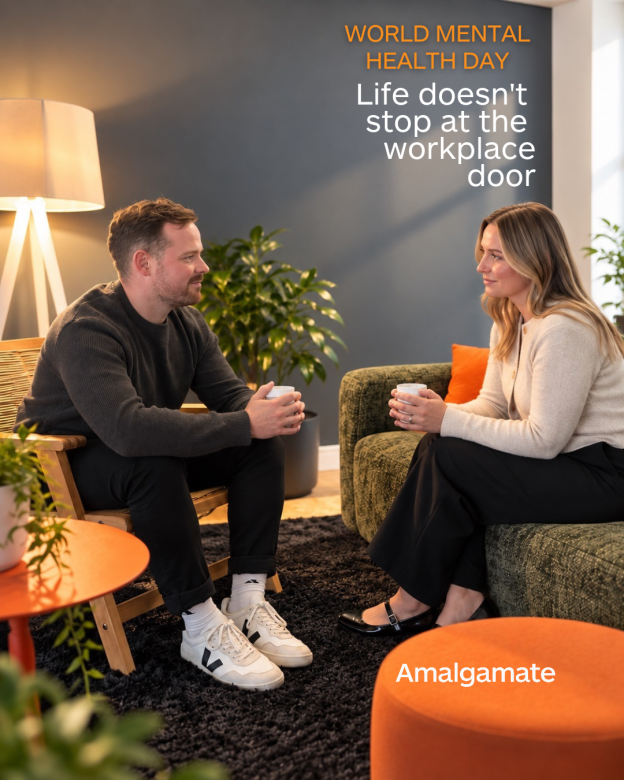
World Mental Health Day | 10 October 2026
Mental health doesn’t begin and end with the working day.
We all bring our personal experiences, responsibilities and challenges to work. Equally, the pressures we face at work can follow us home, affecting our relationships, family life and overall wellbeing.
This World Mental Health Day, we’re highlighting why looking after mental health in the workplace matters, not just for businesses, but for the people and families behind them.
The 2026 World Mental Health Day theme, “Lived experiences heard: real voices, real change,” reminds us that listening, understanding and taking meaningful action are essential to improving mental health.
The scale of the challenge
The statistics paint a concerning picture of mental health in UK workplaces.
According to the Health and Safety Executive (HSE), in 2024/25:
- 964,000 workers experienced work-related stress, depression or anxiety.
- 22.1 million working days were lost because of these conditions.
Meanwhile, Deloitte’s 2024 research estimated that poor mental health costs UK employers £51 billion annually.
But behind every statistic is a person, and often a family, dealing with the wider effects of poor mental health.
The impact goes far beyond work
When someone is struggling with their mental health, the effects rarely remain confined to one part of their life.
Workplace stress can contribute to disrupted sleep, strained relationships, reduced confidence and difficulty switching off outside working hours.
Equally, challenges at home, such as financial worries, bereavement, caring responsibilities or relationship difficulties, can affect someone’s concentration, confidence and wellbeing at work.
These pressures can build gradually, and the signs aren’t always obvious.
Someone who appears withdrawn, irritable, distracted or unusually quiet may be dealing with difficulties that colleagues know nothing about.
That’s why creating a supportive workplace is about more than managing absence or maintaining productivity. It’s about recognising that employees are people first.
When someone receives the right support, the benefits can extend beyond their working life, helping them feel better equipped to manage everyday challenges and maintain relationships with the people around them.
And sometimes, simply knowing that someone has noticed, cares and is willing to listen can make an important difference.
Turning awareness into meaningful support
Talking about mental health is important, but knowing how to support someone who is struggling is equally valuable.
Employers have a responsibility to consider the impact of work on mental health, address workplace stressors and build an environment where people feel comfortable asking for help.
Practical steps include encouraging open conversations, listening without judgement, recognising changes in behaviour and making appropriate support accessible.
Importantly, supporting someone doesn’t mean having all the answers or trying to diagnose their difficulties.
It means being prepared to listen, showing compassion and helping them access appropriate professional support when needed.
This is where Mental Health First Aid training can play a valuable role.
By helping employees and managers recognise potential signs of poor mental health, approach sensitive conversations with confidence and understand where to signpost someone for help, training can strengthen the support available across an organisation.
Mental Health First Aid is not a substitute for professional treatment or effective management of workplace risks. It is one practical part of building a workplace where people look out for one another.
Looking after people is good for everyone
Deloitte’s research suggests employers receive an average return of approximately £4.70 for every £1 invested in employee mental health and wellbeing interventions.
But while the business benefits are important, the human benefits matter just as much.
Supporting someone through a difficult period may help them remain connected, access the assistance they need and feel less isolated.
At Amalgamate, we believe that good occupational health and safety is about protecting the whole person.
Through practical advice, workplace wellbeing support and Mental Health First Aid training, we work alongside organisations to help create healthier, safer and more supportive working environments.
Because when we support someone’s mental health at work, the positive impact can reach far beyond the workplace.
If you’re struggling, support is available
Mental health challenges can affect anyone, regardless of their role, circumstances or background.
If you’re finding things difficult, you don’t have to manage everything alone. Whether you’re experiencing work-related stress, anxiety, low mood or difficulties in your personal life, there are organisations that can listen and help you find the right support.
Samaritans – 116 123
Free, confidential emotional support, available 24 hours a day, seven days a week, throughout the UK and Ireland.
Website: https://www.samaritans.org
Mind – 0300 123 3393
Information and guidance about mental health conditions, treatment and where to find support. The Infoline is available Monday to Friday, 9am–6pm, excluding bank holidays, in England and Wales.
Website: https://www.mind.org.uk
Shout – Text SHOUT to 85258
Free, confidential text-based mental health support, available 24/7 across the UK. An option for anyone who may find it easier to communicate by text rather than speaking on the phone.
Website: https://giveusashout.org
NHS Mental Health Support – 111
If you need urgent mental health support in England, call NHS 111 and select the mental health option to speak to a trained professional, available 24/7. Your GP can also help you access ongoing support.
Website: https://www.nhs.uk/mental-health
If you or someone else is in immediate danger, call 999 or attend your nearest A&E.
A final thought
You don’t need to be a mental health professional to show someone that you care.
A conversation, a little understanding or helping someone find the right support can be a meaningful first step.
This World Mental Health Day, let’s commit to making those conversations part of everyday working life, not just something we think about once a year.
If you’d like to explore how Mental Health First Aid training can help your organisation build a more supportive workplace, get in touch with the Amalgamate team.