Tag Archives: business

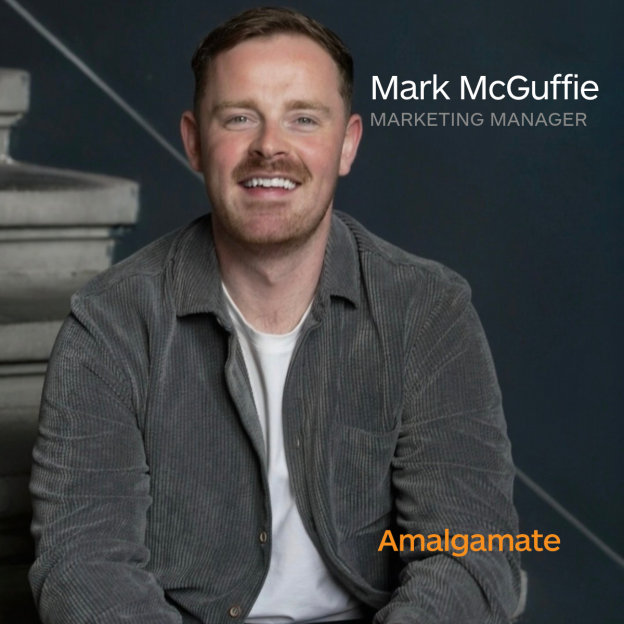
Welcome to Mark!


Mark McGuffie has joined Amalgamate as Marketing Manager, bringing experience across construction, professional services and product design, as well as a background in IT sales with Hewlett Packard Enterprise.

Mark’s role will focus on developing the Amalgamate and Homesafe brands, understanding new markets and helping Amalgamate continue to grow from strength to strength across new sectors.

With experience working across a range of industries, Mark is used to getting under the skin of different markets, understanding what matters to customers and finding the right way to communicate it.

He’s looking forward to getting stuck into a new sector and learning more about the world of health, safety and workplace wellbeing, while helping showcase the knowledge and expertise across the Amalgamate team.

We asked Mark a few questions about his role, the experience he brings and what he’s looking forward to at Amalgamate. Read his answers below.

Great to have you with us, Mark.

What’s your role at Amalgamate, and what will you be focusing on?

I’ve joined Amalgamate as Marketing Manager, working across both the Amalgamate and Homesafe brands.

My focus will be on developing both brands, understanding new markets and helping Amalgamate continue to grow into new sectors. I’ll also be looking at how we communicate what we do and make sure the expertise across the business comes through clearly.

What experience or expertise are you bringing to the team?

I have a degree in marketing and have worked across a number of different industries, including construction, professional services and product design.

I actually started my career in IT sales with Hewlett Packard Enterprise before moving into marketing. Working across different sectors has given me a broad perspective and taught me the importance of really understanding a market, its customers and what matters to them.

What are you most looking forward to about joining Amalgamate?

I’m looking forward to sinking my teeth into a completely new sector and learning from the experience across the team.

Health, safety and wellbeing at work are incredibly important, particularly in the world we work in today, so I’m looking forward to understanding the challenges our clients face and helping communicate the value of the work Amalgamate and Homesafe 360 do.

I’m also excited about the opportunity to help both brands develop and support Amalgamate as it continues to grow into new sectors.

What’s one thing people might be surprised to learn about you?

I occasionally compete in HYROX events and really enjoy the challenge of trying to beat my previous time.

I can be quite competitive, although most of the time I’m competing with myself!

We’re in the driving seat for safety with West Coast Motors!

From directors to drivers, West Coast Motors take pride in their safety management. So we’re delighted to announce a new health and safety partnership with the privately owned transport group.

Based in Campbeltown and established in 1923, the company employs approximately 415 staff, and has a fleet of 220 buses, coaches and boats. It owns and operates the following transport companies:

  • West Coast Motors
  • City Sightseeing Glasgow, Bute and Oban
  • Glasgow Citybus
  • Kintyre Express
  • West Coast Tours
  • Fairline Coaches Ltd; and
  • Perryman’s Buses Ltd.

2006

Amalgamate have been engaged to undertake a gap analysis exercise to review the company’s current safety management system. Our gap analysis will include a detailed examination of the company’s health and safety arrangements, including their health and safety policy, responsibilities and arrangements, records of training, risk assessments, safe systems of work, management of contractors,  and maintenance records.

As well as the gap analysis exercise, we’ll be working in partnership with West Coast Motors’ senior management team to further enhance the company’s safety management system. This project will include an overhaul of their current policy and arrangements, development of a new safety manual and employee induction programme, and ensuring that the enhanced system is being implemented consistently across all of their locations.

We’re very pleased to be working with all the staff at West Coast Motors, and are looking forward to helping the company drive things forward!

For more information on our health and safety services click here, call us on +44 (0)7808 391228 or email annette@amalgamate-safety.com

What you need to know about FFI

There’s been a lot of discussion about Fee For Intervention recently. So what exactly is it all about?

The Health and Safety Executive’s Fee For Intervention (FFI) scheme was introduced in October 2012, and means that companies who break health and safety laws must pay a fee to cover HSE’s related costs – including for inspection, investigation and taking enforcement action. Since its introduction there has been a degree of debate over the implementation of FFI, and some commenters have suggested that is unfair that HSE acts as ‘police, prosecutor, judge and jury’ under the scheme.

In January the first Triennial Review of HSE, chaired by Martin Temple of the Engineering Employers Federation, reflected the concerns that many stakeholders have regarding FFI, stating that it “has been strongly linked to the need for HSE to fill the gap in its budget created by the reduction in government funding. This leads to an impression that HSE has an income target to achieve and, therefore, suspicion that Inspectors’ decisions about where and who to inspect, and what to do once there, will be based on the potential for raising income, rather than an analysis of the risk. For example, a fear was expressed that FFI would create a perverse incentive for inspectors to inspect established companies with ‘good credit’, to find ‘technical breaches’ and hence earn income.”

However, a report released in June by an independent panel asked to review FFI has noted that there is currently no viable alternative which could meet the aim of shifting the cost of regulating workplace health and safety from the taxpayer to those who break the law.

This review, chaired by Liverpool University professor of public policy Alan Harding, found no evidence that the scheme had influenced the direction of HSE’s enforcement policy. It also stated that while the scheme had not been popular, it had been “embedded effectively and applied consistently”, and that “generally, inspectors and dutyholders continue to work together in improving health and safety management”.

HSE Chair Judith Hackitt has stated that “Both HSE and the government believe it is right that those who fail to meet their legal health and safety obligations should pay our costs, and acceptance of this principle is growing”.

So, what are the implications for businesses?

FFI costs are not covered by workplace insurances and will need to be met from a company’s resources, which could potentially be an issue if budgetary allowance has not been made. Whilst this may be a concern, the priority is for businesses to ‘get their house in order’ and avoid this unnecessary expenditure by ensuring robust compliance with H&S guidelines and regulations, and demonstrating that health and safety is managed, organised and communicated with the same level of importance that is placed on other business management systems. Health and safety management systems should be dynamic, provide for goal setting, planning, and measuring performance, and should evolve to take into account changing business needs.

Over and above this, it is good practice to have a comprehensive protocol in place for handling inspections by the Health and Safety Executive, and to ensure that all staff know what their part in that protocol is.

Amalgamate can assist businesses in adopting and integrating the Health and Safety Executives Plan-Do-Check-Act model HSG65 which provides a framework for achieving and monitoring legislative and regulatory compliance.

For more information, contact us at info@amalgamate-safety.com

How Spending on H&S Saves you Money

A new report by the British Safety Council has provided important evidence regarding how much money businesses can save by investing in Health and Safety.

The literature review looked at research from the UK and Europe conducted over the past 20 years, and considered elements including costs, benefits, and return on investment in occupational safety and health.

The cost of workplace health and safety failures is extraordinary. It has been calculated that the cost of accidents, injuries and ill health to the UK economy in 2016/17 was £15 billion. This report considered whether money spent on health and safety strategies had a demonstrable effect on business savings.

The study confirmed that investing in occupational health and safety can reduce sickness absence and injury rates, increase productivity and improve staff morale -for example almost two thirds of workers said they would work harder for an employer who invested in their health.

Studies included in the review proved that businesses can obtain a significant return on investment in H&S, with some showing returns many times their original investment. One study showed that a £16,000 investment to tackle back injuries resulted in £192,000 of savings due to reduced sickness absence, better productivity and lower insurance premiums.

The Chief Executive of the British Safety Council, Alex Botha, commented:

“At a time when the latest GDP figures show the country slowly returning to economic health, we know that making workers ill and injured hurts all of us.

What this literature review tells us loud and clear is that getting health and safety right makes good business sense and can save organisations money.”

Amalgamate Safety