Safety Management Systems – Helping you stay on top of Health & Safety

When we start working with a new client, we sometimes find that they’ve made a well-meaning attempt at getting to grips with a Safety Management System. They might have a Health and Safety Policy, some risk assessments, and maybe a procedural document or two. But often, these are written in a way that make them overly complicated, or extremely lengthy.

There are often parts missing – sometimes important considerations like fire safety management, sometimes smaller things like details on housekeeping standards – but the point is, all these things add up. And if your health and safety documentation is hugely long, or not clearly written and presented, chances are your employees aren’t actually paying attention to it. That’s bad news – because a policy that no-one reads, is a policy that’s destined to fail.

Any good health and safety consultancy can make a safety management system, but here at Amalgamate, we want to make sure that it’s one that actually works for your organisation and people in the real world.

We value clarity, conciseness and consistency. We can develop policies and procedures that mesh together, documents that make plain sense, and a Safety Management System that is understandable by all. We’ll make sure that all the details are covered, that you know what your responsibilities are, and that you have everything you need to protect your employees and your property, as well as staying in line with all the necessary legislation.

Contact us today to learn about our consultancy services, and see how we can help to get you moving in the right direction with health and safety. Call 0141 244 0181, or email info@amalgamate-safety.com

How a Fire Risk Assessment helps to protect your business

Why do you need a fire risk assessment? A fire in the workplace is the kind of risk that many businesses put off thinking about. It is a fairly rare occurrence, but if one happens, the effects can be extremely grave. Consequences could include death or severe injury, as well as loss of property, data, plant or machinery, severely impacting your organisation. The Civil Contingencies Service states that 80% of businesses that suffer a major disaster, such as fire, go out of business within 3 years.

So reducing the risk of fire to the lowest possible level is critical, and a Fire Risk Assessment (FRA) will help you understand what you need to do. The Assessment will establish where danger lurks at your property, and what specific risks are relevant to the premises. We will provide you with a clearly laid out report which will give you all the guidance you need to make the changes that will protect your organisation, as well as keeping you in line with all your legal obligations.

We’ve provided FRAs to a wide range of clients, including for A-listed buildings of national significance, commercial buildings, hotels, offices, leisure facilities, breweries and hospitality venues. So whatever your line of business, we’re ready to help.

Our assessors are true experts – they’re all former fire officers, with experience and qualifications in a range of specialist subjects, including fire regulations, human behaviour in fire situations, and fire alarm systems. They have a thorough understanding of the contributory factors that allow fires to occur, and the means of preventing them

Make 2019 the year that you take the next steps to protect your company’s people and assets – get in touch with us to learn more. Call 0141 244 0181 or email info@amalgamate-safety.com
fire risk assessment

We’ve somersaulted our way to a new health and safety consultancy contract with Ryze

We are happy to announce that we’ll be working in partnership with Ryze Leisure UK to provide ongoing health and safety consultancy services for their trampoline parks. As a physical activity centre, they face a unique set of challenges to ensure the safety of their customers and staff, and we look forward to supporting them in their mission to create the world’s most awesome trampoline parks.

Ryze UK is part of the Circus Trix group, currently with over 30 parks across the globe, all owner operated. Their goal is to reach 100 parks, with 10 in the UK. Ryze UK opened their first parks in April 2015, with entrepreneurs Scott Fairgrieve and James Shade moving from skateparks to trampoline parks, and are about to open their third Ultimate Trampoline Park, with more to follow.

We’ve recently provided a number of services to the Ryze parks in Edinburgh and Glasgow, including safety audits and training, and we’re now looking forward to developing our working partnership to help them to excel in safety.

safety consultancy Ryze

health and safety consultancy Ryze Edinburgh


Our health and safety consultancy services will include:

  • Acting as Competent Safety Advisor for the Glasgow, Edinburgh and Dundee parks, providing advice, guidance and support on all aspects of general health & safety;
  • Providing alerts on relevant changes in H&S legislation or guidance, and offering practical advice on their impact to the business;
  • Giving support in the development of their Health and Safety Policy and Arrangements;
  • Carrying out hazard identification and supporting the development of risk assessments;
  • Undertaking annual audits and reviews of their health and safety arrangements;
  • Establishing a Management Action Plan to prioritise issues requiring attention; and
  • Delivering Health & Safety training, including IOSH Managing Safely, Fire Warden and First Aid Training.

Allan MacDonald, Managing Director of Amalgamate, commented:

“It’s a great opportunity to be working in partnership with such a fun and energetic company. We look forward to helping them meet their Health and Safety challenges.”

We’re coming on board at an interesting time, as new guidelines are being developed for the growing number of trampoline parks in the UK. According to the International Association of Trampoline Parks, the number of trampoline parks in Scotland, England and Wales has increased from just six at the end of 2014 to there now being 145. To deal with regulation of them, a new British Standard is being introduced in March 2017.

There are 13 organisations backing the draft guidelines, including the International Association of Trampoline Parks and the Royal Society for the Prevention of Accidents (RoSPA). RoSPA said that the guidelines “seek to help park managers identify the key risks at both the design and operational stages, with the aim of establishing an effective approach to managing – but not entirely removing – the risk of injury to customers and staff.”

It’s great to see guidelines keeping up with the growth that is occuring within this fun new leisure sector, and we hope that together Ryze and Amalgamate can lead the way in safety standards.

If you’d like to learn more about the benefits of a dedicated health and safety consultancy service read more here, or contact us on 0141 244 0181 or email info@amalgamate-safety.com

Manual Handling Training Course – Protect Your Back!

Musculo-skeletal injuries, including those caused by manual handling, account for more than a third of all work-related illnesses, and cause over 8 million days absence per year. The average length of absence is 16 days – what sort of impact would that have on your business? One of the key things that you can do to reduce the risk of injury to your employees, is for them to learn about how they can use manual handling techniques to move better.

Most work-related musculoskeletal injuries happen because of poor manual handling practices, usually involving heavy or awkward loads; twisting, turning, and bending movements; or working in hard-to-reach areas that require stretching.

Our specialised 1 day Manual Handling Course combines theory and practical skills. As well as watching demonstrations, delegates will get the chance to do guided practice sessions on good lifting, pushing and pulling techniques.

The course covers a variety of topics, including:

  • Anatomy of the spine
  • Top heavy bending
  • How injuries occur
  • The TILE principle
  • Load Risk Assessment
  • Base movement techniques
  • Mechanical handling
  • PPE

Our highly skilled trainers assess learning throughout the course, ensuring that any problem areas are addressed, and that delegates leave with all the knowledge and skills that they need to ensure that they can move well, protect their body, and reduce the likelihood of injury.

In line with the most up-to-date research on preventative care, and depending on the industry and type of work, we may also advise an ongoing programme of exercise to improve strength and resistance to injury.

If you want to know more about our range of training courses, or make a booking, call us on +44 (0)141 244 0181 or email us at info@amalgamate-safety.com.

First Aid Training – 3 days to learn how to save a life

In the UK, thousands of people die every year in incidents where first aid could have saved them, if only there was someone there who knew how to help. The sad fact is that many people don’t know even the basics of first aid. In the workplace though, this is countered by legislation requiring that trained first aiders are available. At Amalgamate, we provide high quality, certified First Aid training to help you ensure that your organisation is compliant, and that your staff are protected.

First Aid training can help you deal with a heart attack, a broken bone, or even small things like a minor cut. Whatever the situation, a First Aider needs to have the knowledge and skills to know how to help when an incident occurs. Our 3 day First Aid at Work training course teaches you everything you need to know to be a First Aider. The course is a mix of theory and ‘hands on’ skills, where you get the chance to practice bandaging, CPR, and assessing an accident site.

We all hope that we won’t need to use our First Aid skills, but if you are ever in an emergency situation, this course aims to help you feel confident that you’re taking the best possible action – who knows, you might just save a life!

The course covers a wide range of techniques, injuries and illnesses, including:

  • Heart Attacks
  • CPR for adults, children and babies
  • Using an Automated External Defibrillator (AED)
  • Choking
  • Anaphylaxis
  • Burns
  • Shock
  • Stroke
  • Epilepsy
  • Blood Loss
  • Shock
  • Broken bones
  • Sprains & Strains, and more…

Our skilled trainers will assess your learning throughout the course, ensuring that any problem areas are addressed, and that you go into the final assessments with all the knowledge and skills that you need in order to take on the role of Workplace First Aider.

We also offer a 1 day Emergency First Aid course, which takes you through the basics. If you’d like to enquire about our range of fully accredited First Aid and other training courses, or make a booking, please phone us on 0141 244 0181 or email info@amalgamate-safety.com

Work Related Stress – what can employers do to help?

Work-related stress is the second most commonly reported cause of occupational ill health in Great Britain, accounting for 44% of all work-related ill-health cases. It is also the most common reason that people are absent due to ill health, being responsible for 57% of all days taken off. This is why the HSE has made it one of their top priorities in the new Health and Work Strategy. Taking a pro-active approach to tackling this problem will help reduce absence, and improve staff morale and productivity, as well as saving businesses money.

The HSE states that “Well-designed, organised and managed work is good for us but when insufficient attention to job design, work organisation and management has taken place, it can result in work related stress.

Stress, including work related stress, can be a significant cause of illness and is known to be linked with high levels of sickness absence, staff turnover and other issues such as more errors.

Stress can hit anyone at any level of the business and recent research shows that work related stress is widespread and is not confined to particular sectors, jobs or industries. That is why a population-wide approach is necessary to tackle it.”

Taking Action on Stress

We’ve established that stress is a key problem when thinking about health and wellbeing in your organisation, but what can you do to combat it? There are a number of resources available to help deal with this issue. The HSE and MIND have an excellent selection of materials to help you deal with a range of mental health issues at work, including understanding your responsibilities, learning to support employees, and being open to communication. When surveys show that 30% of staff disagreed with the statement ‘I would feel able to talk openly with my line manager if I was feeling stressed’ it is evident that creating an environment where employees know that you are non-judgmental and supportive is essential.

As a health and safety consultancy, we take the issue of mental wellbeing very seriously. If you need help developing your policies and procedures, contact us at info@amalgamate-safety.com or on 0141 244 0181.


PPE Regulation Changes – The Basics

The law on Personal Protective Equipment (PPE) is changing. The new PPE Regulation will reflect changes in how PPE is developed, produced and sold, and will affect everyone in the PPE industry – including manufacturers, importers, distributors and retailers.

Although full enforcement of the PPE Regulation won’t take place until April 2018, following a two-year transition period, it is imperative that affected businesses start working towards ensuring that they will be compliant.

The changes mean that companies which import, supply, market or sell PPE will have the same responsibilities as the manufacturer. This includes obtaining product approval, ensuring conformity with the Regulation, and maintaining technical records. It is intended that the changes will help to reduce the amount of inferior standard, counterfeit and illegal products that are currently in the market.

Also, there will be reclassification of some products, a change which focuses on those items that are designed to deal with more serious risks, where the hazard may not be immediately obvious. This means that more ongoing surveillance of items will be necessary. It will hopefully also lead to better designed products that employees find easier to use and care for.

The end result should be that companies will be able to have increased confidence in PPE that they purchase from suppliers, as the products will have gone through increased steps and protocols to ensure that it is certain to protect wearers. Though this may lead to increased costs associated with PPE, the savings from reductions in illness or injury should more than make up for this. After all, protecting your people is the best way of protecting your business.

For complete details of the changes, read this.

For information on how we can help you with risk assessments, or to ascertain your PPE needs, contact us at info@amalgamate-safety.com or call 0141 244 0181.


Businesses set straight about high heels

As a company that cares a great deal about employee well-being, we welcome the news that the government inquiry into dress codes has recognised that action needs to be taken to improve the law around dress codes. The inquiry came about because of a petition started by Nicola Thorp, whose employer sent her home without pay for refusing to wear high heels.

A key area of the report emphasised the impact on women’s health of wearing high heels, stating that “Dress codes which require women to wear high heels for extended periods of time are damaging to their health and wellbeing in both the short and the long term.” Evidence was provided by The College of Podiatry that, on average, women report pain after 1 hour, 6 minutes and 48 seconds of wearing ill-fitting high heels—with a fifth of respondents reporting pain after 10 minutes’ wear. 

It has been confirmed by the Government that the dress code imposed on Ms Thorp was unlawful, but over the course of the inquiry it became evident that in many workplaces, women are still being told they must wear high heels.

Any organisation that values its people should recognise that trying to force women to wear high heels because of aesthetic reasons, is not only patently sexist, but also that medical evidence clearly shows the discomfort and damage that can be caused. The impact that this must have on employee wellbeing, staff productivity and morale is definitely worth thinking about.

Aside from the physical aspects of these imposed dress codes, there is also the impact on mental wellbeing. People whose employers try to impose heavily gendered dress codes may be adversely affected – particularly LGBTQ+ people, who may be made uncomfortable by being forced into archaic gender roles in regard to dress and appearance. Any forward-thinking company that aims to achieve high standards in employee wellbeing should certainly be considering dress codes in the light of these considerations.

Fire Safety Training – Protecting Lives in your Workplace

All our fire safety training courses are delivered by highly experienced professionals, who have worked for many years in the UK Fire and Rescue services as operational firefighters and fire safety educators. This means that they have the knowledge and experience to deliver courses that are relevant, realistic, and interesting.

Fire Warden Course

Our fire warden/fire marshal training sessions are ideal for those who will be undertaking this role, as well as those required to have an understanding of fire safety in the workplace. They cover:

  • Fire science – How fires start and spread
  • The cost of fire to industry
  • The law – The responsibilities of the employer and management team
  • Fire doors and escape routes
  • The responsibilities of a Fire Warden
  • Preventing, detecting and fighting fire
  • Fire evacuation drills and training

The instructor will also take trainees on a walk of the building to look at escape routes and discuss any potential issues.

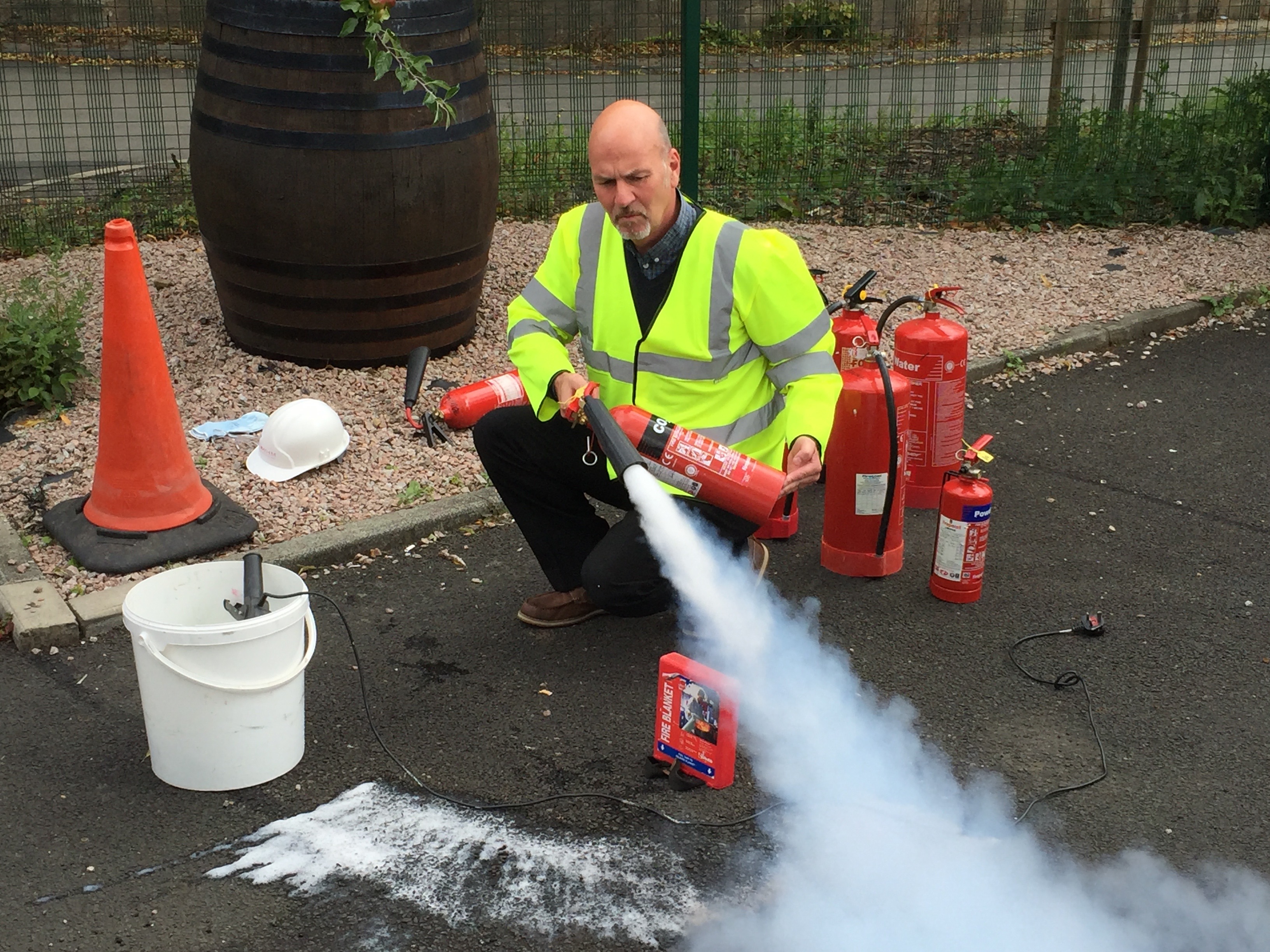
Fire Extinguisher Training

We also run practical sessions, where the trainees head outside to take part in live fire training under controlled conditions. This gives them the opportunity to extinguish a real fire, using the same extinguishers that are used in your workplace. The instructor will work with the trainees to ensure the best, most realistic experience in a safe environment.

fire warden

Course duration is between 3 and 4 hours depending on group size.

As well as training courses, we also provide Fire Risk Assessments, and can work with you to develop policies and procedures. For more information on fire safety, call us on +44 (0)141 244 0181 or email info@amalgamate-safety.com.