Horrible Health and Safety Histories: Child Labour

Child labour was common long before the industrial revolution. Working class children were required to work in order to help support their families, even if this was only by helping their parents to tend their land. With the industrial revolution, however, the amount of jobs that children could be hired to do grew exponentially.

In 1821, approximately 49% of workers were under the age of 20. In the early nineteenth century, the average age that children started work at was 10, however, in industrial areas many started work at the age of 8 and a half if not younger.  Some of the jobs that children found employment doing from the beginning of the nineteenth century were in factories and textile mills, in coal mines, in households as servants, or as chimney sweeps.
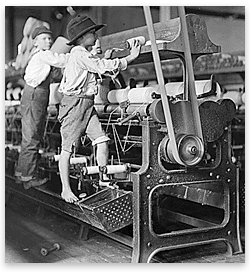
child labourIn cotton mills children might start as scavengers, crawling beneath working machinery to clear away dust, dirt and anything else that might cause problems for the mechanism, and to gather any cotton to prevent wastage. Crawling among the moving parts was extremely dangerous, and accidents and fatalities were common. Children might have their hair ripped out, their fingers and arms broken or cut off, their heads squashed, be decapitated, or, if they got stuck, have their entire bodies crushed by the machinery. When they were older and too big to fit below the machines, they might become piecers, working at spinning machines repairing breaks in the thread.

Child labour was used In matchstick factories, were children would be employed to dip wood in a phosphorus concoction, after which they would be dried out, cut into sticks and packaged. The phosphorus in the air would cause the inside of the factory and the workers themselves to glow a blue-green colour. Inhalation of the phosphorus fumes caused inflammation of the lungs. In addition, about 11% of those exposed to phosphorus fumes would develop ‘phossy jaw’, an infection of the mandible that caused the bone to decay, resulting in facial disfigurement and treated by amputation.

There were many other less dangerous jobs types of child labour in factories. For example, after his father went to debtors’ prison in 1824, a 12-year-old Charles Dickens was forced to take a job in Warren’s Blacking Warehouse, where he worked 10-hour days sticking the labels to pots of boot polish. Even in these environments, however, working long hours indoors where they didn’t get enough sunshine to produce the vitamin D necessary for proper bone growth meant that the children employed were likely to develop rickets.
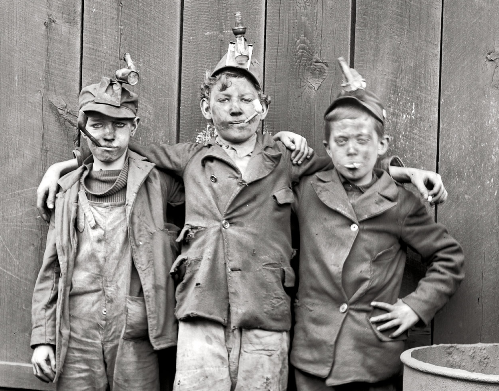
This was also a problem for many children employed to work in coal mines. The darkness underground also caused long-term visual loss. The coal dust and lack of proper ventilation resulted in respiratory problems and in a condition called ‘black lung disease’ . In addition, having to work stooped over in small areas caused some children to develop spinal deformities.

It was mainly girls who were employed as household servants, as there was a servant tax on male domestics. Families with an annual income of £150 would take on a girl of about 13 or 14 as a general maid. In 1891 it was estimated that 1 in 3 women between the ages of 15 and 20 were in domestic service.

Until 1788 children as young as 4 years old could be put to work as chimney sweeps, and even after the passing of a law in 1840 that made it illegal to allow anyone under the age of 21 to climb a chimney in order to clean it, children continued to be used for this purpose. Chimney sweeps were often orphans, and when they grew too big to be able to crawl through the chimney, at around 9 or 10 years old, they would be put back on the street. In order to prolong the amount of time children could work as chimney sweeps they were frequently underfed by their bosses. The children’s skin would be scraped raw by climbing down the chimney, eventually developing calluses as a result. Falling or getting stuck often resulted in death, and the constant inhalation of soot caused lung damage. This form of child labour was not only cruel, but completely unnecessary as there was no advantage to having a child crawl through the chimney to clean it than to use brushes.

The first piece of legislation passed that began to curtail child labour was the 1833 Factory Act. This banned children under the age of 9 from working in textile factories and limited children between the ages of 9 and 13 to working 9 hours a day and 48 hours a week, and between 13 and 18 to working no more than 12 hours a day and 69 hours a week. Furthermore, nobody under 18 was allowed to work at night (from 8.30 pm to 5.30 am). Factory inspectors were appointed to make sure the law was being obeyed, however, as there were only four inspectors meant to enforce the act, children continued to work longer hours than they were meant to. This law only applied to children working in factories, however, and it wasn’t until 1842 that the Mines Act was passed which banned children under the age of 10 from working underground.

After this a series of laws were passed which gradually raised the minimum age for working and limited the number of hours a day that children could work. In 1844 a law banned all children under 8 from working. Then in 1847 a Factory Act said that women and children could only work 10 hours a day in textile factories. This was then extended to all factories in 1867. 1875 saw a law passed which required all chimney sweeps to be registered with the police, finally putting an end to the practice of using children in this profession. Then in 1878 it became illegal to employ any child under the age of 10.

Alongside these laws that began to reduce the level of child labour, others were passed which increased the amount of education they were entitled to. The 1833 Factory Act required employers to provide 2 hours of schooling every day to all the children in their employ. It wasn’t until 1870 and Forsters Education Act, however, that the state began to take responsibility for education. It decreed that schools would be provided for all children between the ages of 5 and 13 and that the state would pay the fees of the poorest children. In 1880 school was made compulsory for 5 to 10 year olds, however, by the early 1890s only 82% of children in this age group were in school as many families depended on the income their children could provide. Fees for elementary education were abolished in 1891 and from 1899 children were required to go to school until they were 12.

In 1901 it was estimated that 300,000 children worked outside school hours, and it wasn’t until 1918 that labour was restricted to 3 hours a day for children under the age of 14.

When we compare this to our current situation it is easy to see how far we have come. Not only are children required to receive schooling until the age of 16, but children under 13 are generally prohibited from any kind of employment. Children between 13 and 16 are not permitted to work full-time, or to work in places like factories or on construction sites unless this is as part of a work experience. Young people, those between the ages of 16 and 18, must have their own risk assessment done, receive special training, and be supervised by a competent person.

If you currently employ young people, or are considering employing young people, and want to make sure that you are meeting your legal obligations and reducing the level of risk in your workplace as much as possible, give us a call on 0141 244 0181 or visit our consultancy page.
Horrible Health and Safety Histories: Disorders of Railway Travel

Due to the increasing use of the railway as a means of transport in the nineteenth century, as well as the common occurrence of railway accidents and compensation claims made by passengers, a growing amount of work was done in the 1860s into the disorders caused by railway travel. This work was led by the medical journal The Lancet, which published an eight-part report on ‘The Influence of Railway Travelling on Public Health’ in 1862. As well as noting the ‘primary’ effects of railway accidents on passengers, such as broken bones, burns, and cuts, they noted a series of ‘secondary’ effects, such as ‘giddiness, loss of memory, pains in the back and head’, ‘tingling and numbness of the extremities, local paralysis, paraplegia, functional lesions of the kidney and bladder’, and ‘slowly ensuing symptoms of intellectual derangement’. 

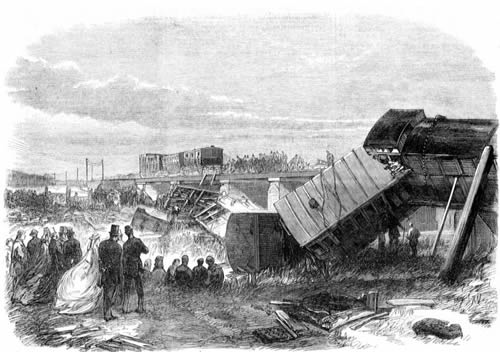
Picture of the crash Charles Dickens was involved in at Staplehurst

These secondary effects can be seen in Charles Dickens, who lost his voice for two weeks after he was involved in a railway accident at Staplehurst in 1865, and who, when writing to his friend Thomas Mitton five days later about the incident said that ‘in writing these scanty words of recollection, I feel the shake and am obliged to stop’.

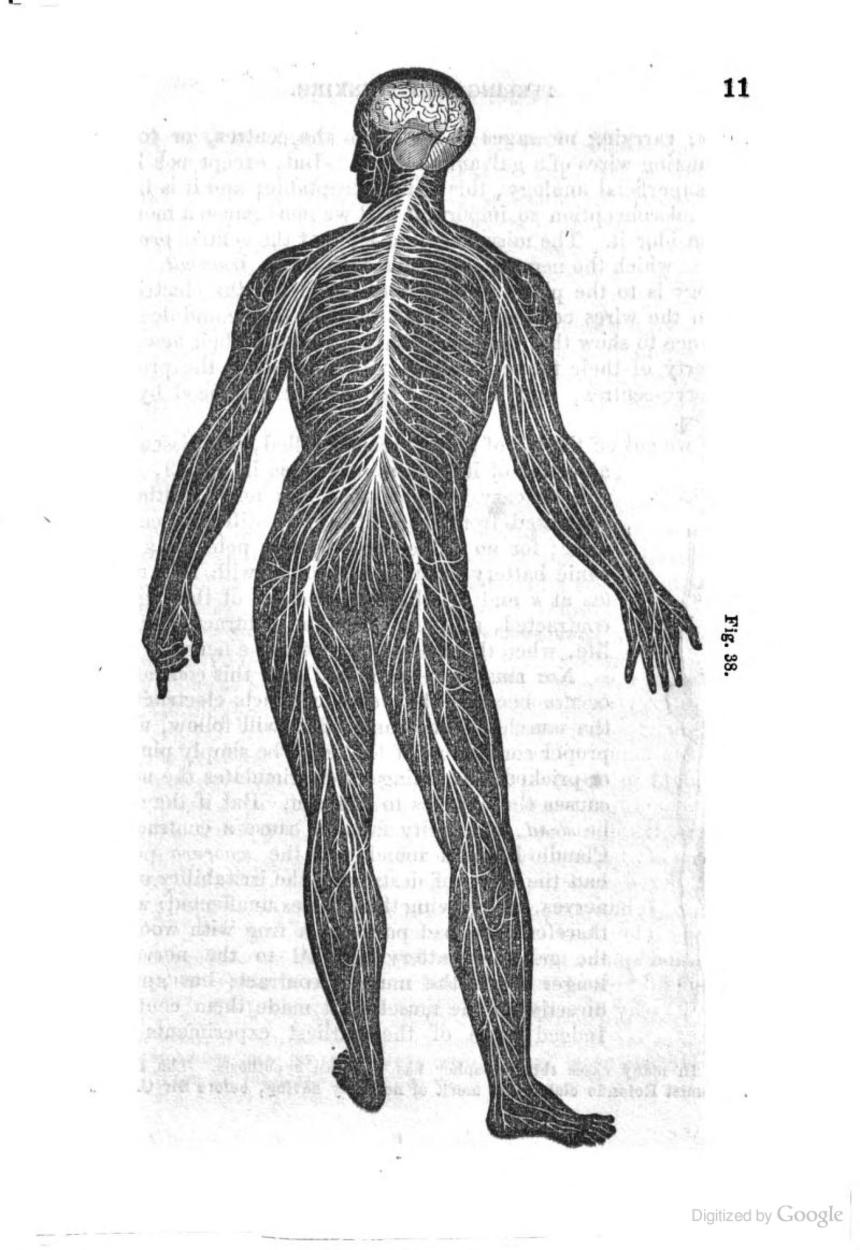
The cause of these secondary effects was believed to be the nervous system. The discovery of reflex physiology by Marshall Hall in 1833 combined with a conception of the nerves within the body as a kind of biological telegraph system meant that it was thought that shocking external stimuli might resonate around the body without the input of the brain. When this happened, the normal functioning of the organs might be affected. Medical professionals argued that railway accidents might cause a ‘violent concussion of the nervous centres’, and the fact that many survivors complained of back pain led them to believe that the problem lay in the spinal column, which had become hit or jarred.

Nineteenth-century drawing of the nervous system by G H Lewes

The most influential person to discuss ‘railway spine’ was John E. Erichsen, an eminent surgeon who frequently served as a medical expert witness in railway compensation cases. He believed that the ‘shakes’, ‘jars’, and ‘blows’ of railway accidents could cause chronic inflammation in the spinal cord and spinal membranes. While he believed that there was a physical cause of the secondary symptoms described by many passengers, he did acknowledge that these might be exacerbated by the psychological shock of being in an accident, commenting on ‘the natural perturbation of mind that must disturb the bravest’ in such circumstances.

In doing so, Erichsen acknowledged that the mind might affect the physical condition of the body and that psychological shocks might have real physical effects. Others, such as Herbert Page, would go on to place more of an emphasis on the role that ‘great fear and alarm’ played in injuries from railway accidents, arguing that fear alone was enough to inflict a severe shock to the nervous system, producing the secondary symptoms listed by so many survivors.  In arguing this, Erichsen and Page paved the way for the work of Freud and his talking cure, as well as later understandings of shell shock which would eventually lead to our modern understanding of post-traumatic stress disorder.

As The Lancet noted, however, accidents were not the only thing about railway travel that made people fear for their health. Their report, they said, was partly written in response to a ’vague dread of certain undefined consequences to health resulting from influences peculiarly produced by this mode of travelling’. Quoting from a speech given by Lord Shaftesbury, they said that many members of the public believed that railway travel created a ‘state of great nervous excitement’ that caused many people who had frequently travelled by railway to be forced to stop. Their aim, then, was to provide the first study of the effects that the use of the railway might have on travellers’ health.

Illustration of a third class carriage in 1859

In the report, the oscillations and vibrations of railway travel are described as producing ‘a series of small regular concussions’ on the body, due to the rigidity of the springs, the roughness of the rails, the centre of gravity of the carriages, and the amount of friction between the wheels and the rails. The degree to which these oscillations and vibrations were felt was said to vary from class to class. In first class the amount of padding on the seats meant that passengers experienced ‘an almost incessant repetition of mere vibrations’ which ‘sway[ed]’ the body’. At the other end of the scale in third class, where the seats had no padding at all, the passengers would experience ‘short, sharp jolts’, causing them to suffer a ‘soreness’ after a long journey similar to that of a bruise. This movement of the train forced the body to constantly tense and relax its muscles, producing a general fatigue. It could also cause the spine to become concussed in much the same way as it might be in an accident, producing the same ill effects.

The fact that the railway brought with it a growing number of people who would commute between the city and their home was said to bring with it its own dangers. The ‘wear and tear’ caused by frequent journeys plus the ‘anxiety and mental pre-occupation’ of knowing that one needed to rise early and hurry to the station was thought to be especially fatiguing on the body and mind. In people with weak constitutions, these effects were believed to be particularly dangerous, with The Lancet commenting that for certain people with ‘unhealthy conditions of the heart’ this added stress had ‘many times proved fatal’.

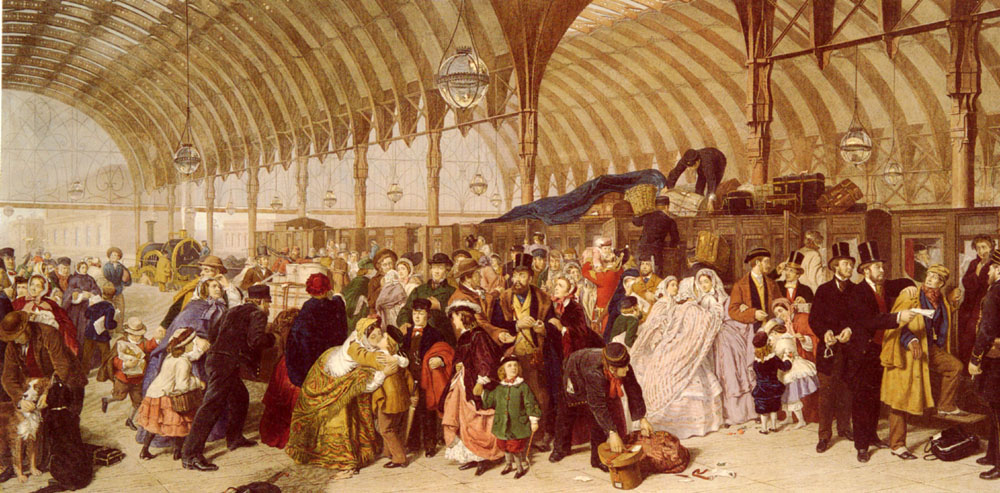
William Powell Frith’s painting The Railway Station (1862) depicting Paddington Station

Railway travel was also described as damaging to the senses. The speed at which trains travelled was thought to ‘severely tr[y]’ the ‘visual powers’ as the retina was forced to focus on quickly passing objects and the brain was required to process these rapid impressions. If a passenger then chose to read while on a train they merely exacerbated the situation. The rattle and noises associated with railway travel was believed to excite the brain through the vibrations of the nerves in the ear.  The combination of sights and sounds, the Lancet stated, frequently caused passengers to suffer from ‘dizziness, headache, sickness, and mental fatigue’. 

The combined effect of all of these influences on the body on frequent travellers, The Lancet suggested, was rapid ageing. They quoted from the observations of a physician who had to travel on the Brighton line, who said that he ‘had never seen any say of men so rapidly aged’. 

In this eight-part report, the effects of railway travel on the workers received relatively little attention, demonstrating the tendency for concerns about the dangers of the railway to be focused on the passengers. What is said about the workers, however, demonstrates that they were believed to either adapt to their surroundings, so long as they were healthy and started their employment on the railways young, or to embody all of the worst long-term effects of railway travel. According to the journal, in some train drivers ’The nervous system is injured; the persons affected grow thin; the generative power dies out; the body is agitated by starting and convulsions; the intelligence is weakened’. In some there was supposedly also  ‘a notable loss of visual power; the loss of hearing; rheumatic affections’ and ‘dull, continuous, persistent pains accompanied by a remarkable sensation of feebleness and numbness, rendering the acts of walking and standing equally painful’.

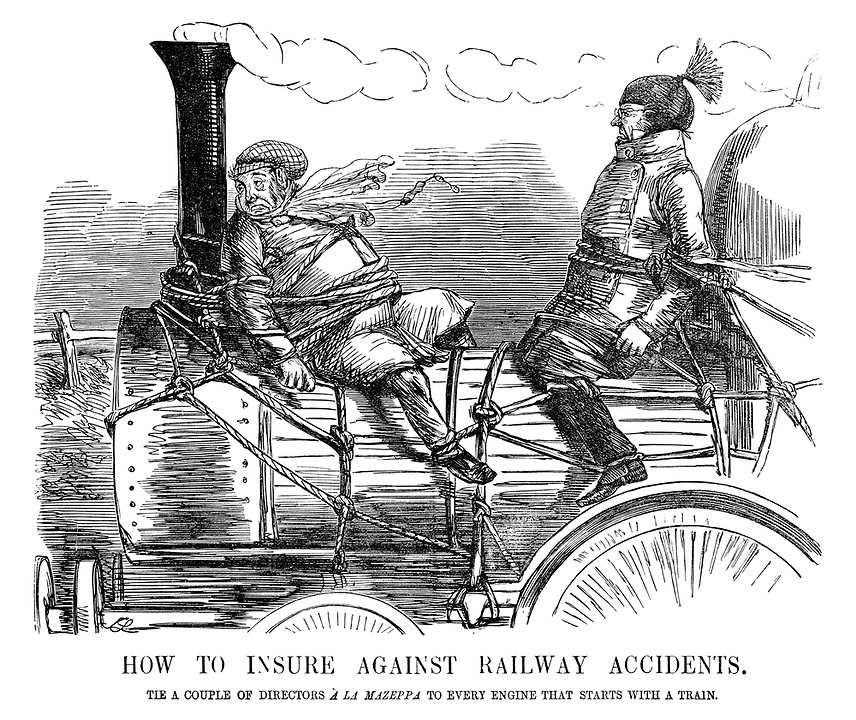
Illustration from Punch magazine in 1853 entitled ‘How to insure against railway accidents’. According to them the solution was to ‘Tie a couple of directors à la mazeppa to every engine that starts with a train’.

This focus on passenger rather than worker safety meant that when legislation did start to be passed it didn’t do much to improve the working situation of ‘railway servants’, as they were called. While in 1871 the Regulation of Railways Act founded the modern inspectorate, empowered to investigate accidents, it wasn’t until 1900 that they were allowed to investigate accidents to staff. 

Many of the things we take for granted today about railway travel, such as continuous brakes, guidance on boilers to avoid explosions, block signalling, automatic locking doors, cabs designed to protect the driver in collisions, noise level maximums in driver cabs, and rules for emergency evacuation from trains, were brought about by this inspectorate. The peace of mind we enjoy every time we board a train, whether it is as a passenger or as a worker, is a result of the legislation that started to be passed in the second half of the nineteenth century in response to public concern and reports such as The Lancet’s that forced the railway industry to place health and safety at the top of its agenda. 

Horrible Health and Safety Histories: The Invention of the Railway

The invention of the steam locomotive in 1804 led to an entirely new industry and a vast variety of new workplace risks. The first railway line to allow a steam locomotive, built between Stockton and Darlington and opened in 1825, followed by the first inter-city passenger railway introduced between Liverpool and Manchester only five years later, led to the creation of many private railway companies and a massive influx of people wishing to invest in railroads. This then led to what was referred to as the ‘railway mania’ between 1840 and 1850 which saw an entire network of railway lines to connect many of Britain’s cities and towns being laid.

The creation of this network came at a high cost for many of the workers employed to build it. In 1846 a Select Committee of the House of Commons found that in two years constructing a 2.5 mile-long stretch of railway line 7 workers had died, four by the bursting of a drift mine, one by falling down a shaft after a rope broke, one after falling from a house being knocked down to build the railway line, and another after falling out of a bucket pulling him up from a shaft. Between 1835 and 1839, as the railway between London and Birmingham was built, the General Infirmary in Northampton alone treated 121 accident victims, mostly for broken bones. Dislocations, amputations, and cuts were also frequent. As gunpowder was used for blasting, railroad construction workers also risked burn injuries or potentially even impalements by their tools. One man, Phineas Gage, had his tamping iron shot through his head, entering below the eye and exiting the top of his head, and yet survived. Another man, Henry Lacy Pomfret, was killed instantly by a similar accident.

Once the railway lines were built, there were serious hazards for those who worked and travelled on the trains. Statistics collected by the British government showed that between July and December 1855 out of a work-force of around 22,300 people, 63 were killed on the job and 54 were injured. Indeed an article in The Saturday Review in 1870 went so far as to say that ‘Scarcely a single day now passes without a railway accident’. Until the invention of automatic braking systems in the late 1870s, it was the job of brakemen to manually apply the brakes on trains by climbing over the cars. This system not only endangered the lives of the workers but of everyone else on the train and even on other trains on the tracks, as it caused trains to have braking distances of 800 to 1200 yards. Derailments were common due to broken rails or collapsing bridges, although these became less common as steel replaced iron to construct railway lines. At times, as in the case of a train crash in which Charles Dickens was involved in 1865 in which 10 people died and 50 were injured, accidents were caused by work being done on the lines of which the driver was not made aware. Wheels, axles and coupling-chains would sometimes break, or carriages would catch fire.

Picture of the crash Charles Dickens was involved in at Staplehurst in 1865

As the Saturday Review noted, however, in many cases accidents were caused by ‘one train getting in the way of another’. Such accidents were so common that in 1852 when Punch, a satirical magazine, ran an issue in which they changed the words to popular nursery rhymes to make them about the dangers of railway travel, their versions of Hickory, Dickory, Dock and Hush-a-by Baby were both about train collisions.


Hickory Dickory Dock:

Smashery, mashery, crash!
Into the “Goods” we dash:
The “Express,” we find,
Is just behind-
Smashery, mashery, crash!

Hush-a-by Baby:
Rock away, passenger, in the third class,
When your train shunts a faster will pass;
When your trains’ late your chances are small –
Crushed will be carriages, engine, and all.

While the railway brought with it the use of a standard time system in Britain (prior to this each town and village had used its own local time) so that passengers could use trains timetables to predict when trains would arrive and depart, train schedules were tight and frequently changed and the smooth-running of the system relied on many individuals timing things correctly and communicating effectively. Long stretches of single track before the invention of automatic electric signals meant that signalmen had to carefully time the passage of trains from signal boxes placed at intervals along the line and notify the adjacent boxes. If a train broke down or stopped out of sight of one of the signal boxes, however, there was no way to tell, meaning that trains ran the risk of being collided with from behind. 

This was what happened in the Clayton Tunnel crash in 1861 after the stationmaster at Brighton station allowed three trains to leave within 7 minutes of each other. A fault in the signal box before Clayton Tunnel caused it to continue to signal that the line was clear after the first train had gone into the tunnel. When the signalman noticed the fault, he waved a red flag at the second train, causing the driver to stop the train in the tunnel. As the signalman was not sure if the driver had seen his flag, when the signal from the box at the other side of the tunnel came through saying that the tunnel was clear again he thought both trains had gone through, and signalled the third train to enter, where it collided into the back of the previous one. 23 people died, and the stationmaster at Brighton was charged and found guilty of negligence.

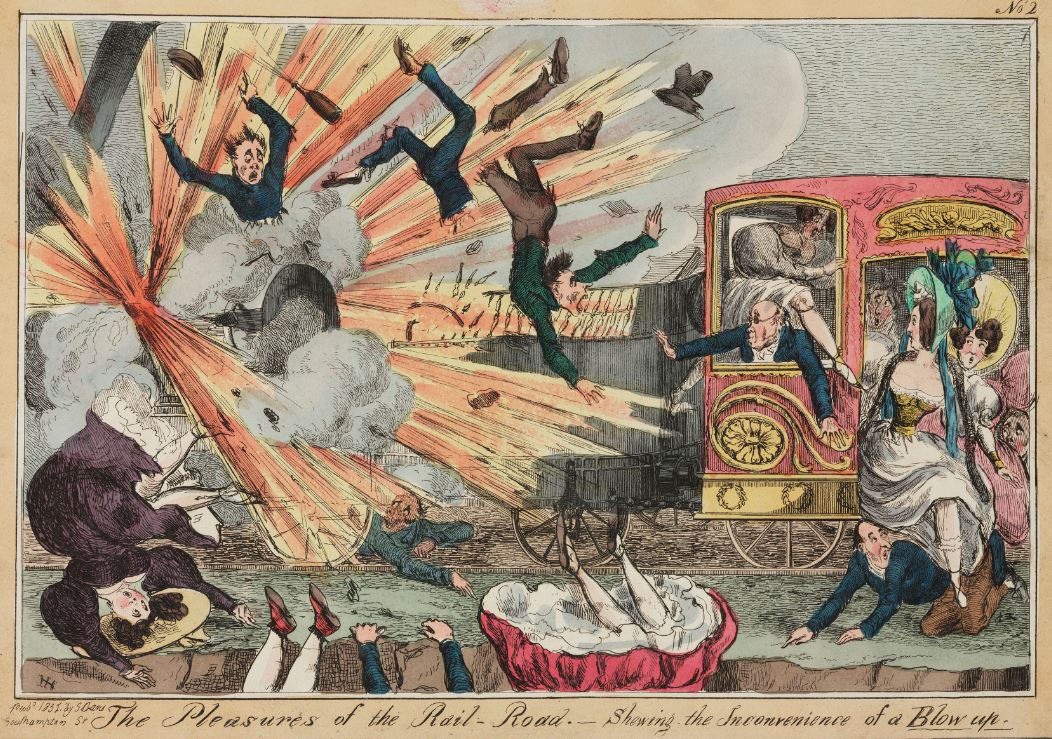
Illustration from Punch magazine in 1831 showing the perceived dangers of railway travel

If there was a change to the scheduling, it was the job of conductors to inform the train drivers, however, this did not always happen. This was the case in August 1846, when John Stevens, an engineer, was driving his train in the United States when, due to an uncommunicated change in another train’s schedule, his train collided with another coming in the opposite direction. Stevens was ‘greatly scalded, bruised, lacerated, hurt and wounded’ and was permanently ‘sick, sore, lame and disordered’. 

In the case of John Stevens, he sued his employer and the case went all the way to the Supreme Court. Like in the Clayton Tunnel accident, as well as many other work-related injury claims at this time, however, it was ruled that the fault lay with another employee, a conductor who had not relayed the information about the schedule change, not the employer, and so the railroad directors were not required to pay any compensation. 

In such court cases, it was usually argued that in taking the job workers had accepted the ‘ordinary risks’ associated with the post, and if those risks had changed but the employee had continued to work then they had consented to the new arrangement. Until the 1870s, an injured employee had to prove that they had been injured by the employer and that neither they, nor any of their coworkers, could have done anything to prevent the accident. As historian Jamie Bronstein explains, ‘Getting clobbered’ tended to be considered ‘evidence of being negligent’.

This meant that while employers would sometimes pay a small amount towards medical bills out of charity, the brunt of any expenses were paid by the families of the injured and charitable organisations. In the 1850s many railway companies began to require their employees to join a benefit fund, where employees would pay an annual subscription which would give them a limited one-time payout or a weekly payment in the case of an accident, placing the responsibility on the workers to be prepared for any potential accidents.

Tay Bridge collapse in 1879 as a North British Railway passenger train crossed it in a storm, resulting in 59 deaths.

As the lawyers of injured workers often pointed out, this meant that workers on the railways were not entitled to the same compensation that passengers were, even if they were injured in the same accident. The passing of Lord Campbell’s Act in 1846 meant that the family members of passengers who had died in a railway accident could claim compensation from any worker whose negligence was seen to have caused it, however, very quickly this led to family members claiming damages from the railway companies themselves. By the 1860s, the railway companies lost almost every personal injury claim made by a passenger or their family that went to court, and chose to settle many claims out of court to try and limit the amount of compensation they might have to pay. In reports of railway accidents in newspapers and the periodical press the focus tended to be on the passengers, not on the workers, and the blame was often placed on the employees. Indeed, an article in Temple Bar in 1861 on the causes of railway accidents argued that railway safety would be greatly improved if ‘railway servants all over the country can be rendered more trustworthy and more vigilant’, arguing that if ‘the general manager, the locomotive superintendent, and the resident engineer’ were ‘held personally responsible for every accident occurring under their management’, passenger safety would be greatly improved.

How far we have come in the past century in improving worker health and safety is demonstrated by the fact in 2015 there was not a single workforce fatality on British railways.

Tune in next week to find out about the weird and wonderful health problems that were believed to be caused by railway travel in the nineteenth century, which included a forgotten condition called ‘railway spine’ and madness!

Horrible Health and Safety Histories: Cotton Mills

‘Poisoned by the Fluff’: The Dangers of Nineteenth-Century Cotton Manufacturing

In the early 1830s Dr James Phillips Kay exposed cotton as a common killer. After treating many workers from cotton mills, he noticed that many of his patients complained of bad lungs. He wrote that in many of the people he saw, ‘Entrance into the atmosphere of the mill immediately occasions a dry cough, which harasses him considerably in the day, but ceases immediately after he leaves the mills. […] these symptoms become gradually more severe’ until they are ‘harassed by a frequent cough’. He labelled the condition ‘spinners’ phthisis’ – phthisis being the common term used for pulmonary tuberculosis – and noted that if the condition was allowed to progress it could be fatal.

Drawing of the inside of a cotton mill

The cause of the disease was highlighted in Elizabeth Gaskell’s 1855 novel North and South, in which Bessy Higgins, a nineteen-year-old worker in a cotton mill dies from the condition. As she explains, the manufacture of cotton released ‘Fluff. […] Little bits as fly off fro’ the cotton, when they’re carding it, and fill the air till it looks all fine white dust. They say it winds round the lungs, and tightens them up’.  Carding was the process in cotton mills in which the raw cotton fibres were fed through machines to disentangle and clean them. Working in this environment, she says, leads many people to fall ‘into a waste, coughing and spitting blood, because they’re just poisoned by the fluff’.

While the 1802 Health and Morals of Apprentices Act had required that mills and factories have sufficient windows for proper ventilation, the reason for this had been to reduce bad smells in the working environment, not to try to remove harmful fibres from the air. This was because at the time diseases were believed to be transmitted by miasmata: decomposed material found in foul-smelling air, dirty water, and unhygienic living conditions. It was not until the Factory and Workshop Act of 1878 that it was stipulated that ventilation needed to be adequate ‘to render harmless, so far as is practicable, all the gases, vapours, dust, or other impurities generated in the course of the manufacturing process or handicraft carried on therein that may be injurious to health’. As a result, in the 1850s when Gaskell was writing, despite there being an association between lung conditions and working in cotton mills, it was up to the factory owner to decide if they would take any measures to protect the health of their workers. Some cotton mill owners would install a fan at one end of the carding room to carry off the cotton dust, but many chose not to as it was a large expense that brought in no profit. This meant that, as an article in the medical journal the Lancet noted in 1863, ‘A carder seldom lives in a cardroom beyond forty years of age. Many have to give up working much younger’.

As Gaskell’s novel demonstrates, however, it was not always only the factory owners who did not want fans to be installed. As was the case with other measures to improve health and safety in the nineteenth century – such as the reduction of working hours for women and children brought about under the Factory Act of 1833 – the workers in cotton mills themselves were at times resistant to the installation of fans. As Bessy Higgins explains, some workers complained of hunger as a result of the improved ventilation, arguing that ‘they’d been long used to swallowing fluff’ and ‘that their wage ought to be raised if they were to work in such places’. Such statements reveal the desperate conditions the working classes were living in at this time, which caused efforts to improve their working conditions to seem like threats to their survival.

While it is impossible to know the numbers of people who died in the nineteenth century from the inhalation of cotton, it is possible to get an idea of how many people were exposed to these risks. In Friedrich Engels The Condition of the Working-Class in England in 1844, he states that in 1834 ‘nearly a million and a half human beings’ worked in the cotton industry, and that by the time he was writing ‘it may be safely assumed that […] the number of workers is greater by one-half than it was in 1834’. A study in 1908 into the health of men working in cotton manufacturing in Blackburn found that 73.8% of them complained of suffering from asthmatic symptoms from inhaling dust.

Cotton fluff filling the air

Spinners’s phthisis would later become known as byssinosis (from byssus, the Latin for cotton) and was recognised as an industrial disease under the National Insurance (Industrial Injuries) Act 1946. Nevertheless, a study in 1948 by the Department of Health at Manchester University found that a substantial number of Lancashire workers involved in the blowing and carding rooms in cotton mills still suffered from the disease. Out of 103 men with at least 10 years of exposure to cotton dust, they found that 52% had symptoms of early byssinosis, and 10% had reached the third stage of disabling byssinosis. Recent studies into byssinosis have shown that it is linked to both an acute fall in ventilatory function, which is reversible by removal from the dusty environment, and an irreversible, chronic kind of industrial bronchitis.

Despite the fact that people were becoming aware of the dangers posed by the breathing in of harmful substances almost two centuries ago we still have a long way to go in eliminating this occupational health risk. The exact pathology of byssinosis is still not entirely understood, meaning that efforts to reduce the occurrence of the disease continue to depend on removing dust from the work environment in cotton mills.  Such efforts have involved fitting exhausts to the stripping brushes in carding machines, installing air conditioning, and ensuring that work spaces are regularly vacuum cleaned, as well as applying an oil emulsion to raw cotton to prevent it from releasing as much dust. Continued investigation into whether it is, as many medical authorities now believe, some foreign matter in cotton – such as stems, leaves, or bacteria – that cause byssinosis, and whether certain people are particularly susceptible to the disease, is required.

Furthermore, cotton is not the only harmful substance that people continue to breathe in in the workplace. IOSH’s No Time to Lose campaign has been highlighting the carcinogenic exposure issues associated with workers inhaling silica dust and asbestos fibres. The awareness of risks associated with the inhalation of silica dust is even older than that linked to cotton dust, dating back to the Ancient Greeks when the physician Hippocrates noted that miners tended to suffer from breathlessness. Despite this, how silica dust actually causes lung cancer continues to be unclear, and it is estimated that in Britain alone, around 800 people a year die from lung cancer caused by work-related silica exposure. In addition, despite the fact that the use of asbestos is now banned in the UK, it is still present in materials in so many buildings that approximately 5000 people die annually from being exposed to asbestos at work.

If you need advice and support around developing management systems for hazardous substances, including dust, silicates, etc., gives us a call on 0141 244 0181 or visit our consultancy page.

Horrible Health and Safety Histories: Penny Licks

Ice Cream Vending With a Drizzle of Cholera and a Sprinkling of Tuberculosis

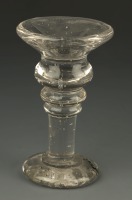
At the beginning of the nineteenth century, the end of the Napoleonic wars saw many Italians move to Britain. They brought with them their own techniques for making smooth, creamy ice cream – gelato. Gelato vendors would go around the streets with carts selling their wares in what were called penny licks – small, conical cups made from glass, with thick bases to make it look like there was more in them than there actually was. For the price of a penny, customers would lick the glass clean and hand it back to the vendor, who would rinse it and reuse it for the next customer. The conical shape of the penny lick made them hard to properly clean, meaning that the germs from one customer were easily passed on to the next.

Penny lick

During the first half of the nineteenth century, however, when penny licks became popular, germs had not yet been discovered. The orthodox model for understanding disease was based in a belief in miasma. According to this theory, disease was spread by particles of decomposed material, or miasmata, which could be found in foul-smelling air, contaminated water, and unhygienic living conditions. As a result, infection was linked to specific locations rather than people. Germ theory as a contradictory model for understanding the spread of disease did not begin to gain momentum until the 1850s, when John Snow published his research on the 1845 London cholera epidemic in which he traced the disease to the Broad Street water pump. Later that decade Louis Pasteur discovered that living microorganisms were responsible for fermentation, which led him to believe that such bacteria were also responsible for diseases. It was not until the 1870s, however, when Robert Koch discovered the microorganism responsible for Anthrax, that there was undeniable proof that germs caused particular diseases.

These changing attitudes to disease can be seen in the history of the penny lick. An article in 1879 in medical journal the Lancet blamed outbreaks of cholera on the reuse of glassware, saying that ‘For cleaning they are dipped into dirty water which contains the mouth secretions of previous buyers, swabbed with a  small, wet offensive cloth and up-ended on a soiled barrow top’. Robert Koch’s later discovery of the microorganism responsible for tuberculosis in 1882 would eventually lead to a law being passed in London in 1899 which banned penny licks.

The upside of this ban was not only that it helped to hinder the spread of contagious diseases, but it led to the invention of the ice cream cone. In 1888 Agnes B. Marshall included a recipe for an edible cone to hold ice cream in her cookery book, and in 1902 Antonio Valvona, an Italian living in Manchester, patented a machine for making conical biscuits to hold gelato after getting the idea travelling around Belgium.

So next time you’re enjoying your 99 and complaining that it doesn’t cost 99p anymore, be grateful that nineteenth-century health and safety laws mean that you get a flake with it and not an infectious disease.

If you’re a business and you want help and support with your food hygiene needs, give us a call on 0141 244 0181 or see our consultancy page.

Update on Legal Privilege

A couple of recent court rulings have produced new issues for lawyers advising their clients about professional legal privilege with regard to internal investigations.  Whereas up until recently legal privilege has protected communications between clients and lawyers for litigations that are both in progress and contemplation, the court cases of Serious Fraud Office v. Eurasian National Resources Corporation Ltd., Bilta (UK) v. Royal Bank of Scotland, and R (on behalf of the Health and Safety Executive) v. Paul Jukes have seen judges take a narrower view of what communications should be protected.

The rulings in these cases have important consequences for companies mounting internal investigations, and for the documents created during those investigations. In the case of SFO v. ENRC it was ruled that documents created by lawyers and forensic accountants during an internal investigation were not privileged as they were made with no more than a general apprehension of future litigation. In this criminal case, the internal investigation had been mounted in response to an email received from an apparent whistleblower, alleging that the company’s Kazakh subsidiary had engaged in acts of bribery and financial wrongdoing.

In the Bilta v. RBS case, a judgment was made that if litigation is not the sole purpose for creating documents, and if that litigation is not adversarial, then they are not protected. Bilta was required to show evidence that they were anticipating litigation when they started their internal investigation in order for interview transcripts produced during this process to be protected. They needed to show documentation of the outset of litigation in the form of their lawyers’ retainer letter and internal emails in order to argue that their internal investigation was in response to a letter received from the HMRC making allegations of tax fraud.

In the criminal case of R. v. Jukes it was ruled that an employee’s statement made to their company’s solicitor was not privileged. In this case a statement made by Paul Jukes – the transport and operations manager at a waste and recycling company where an employee was fatally injured in 2010 – to his employer’s lawyer, in which he stated that he was responsible for health and safety on site, was deemed admissible to contradict a later statement made to the HSE in which he denied any such responsibility. The court ruled that documents created for a criminal investigation or to avoid prosecution were not protected. As a result, Jukes was sentenced to nine months imprisonment.

So, what do these rulings mean for your company? The SFO v. ENRC case is currently being appealed, and until the result of this appeal is known lawyers are somewhat in limbo with regard to how to advise their clients on what is covered by legal privilege. There are, however, several steps that you can take in order to protect yourself. It is vital that you proceed with caution when beginning internal investigations. It is more important than ever before that your investigation procedures are robust. We would advise that you engage lawyers as soon as possible, and that you make sure that the circumstances surrounding the beginnings of investigations, and the cause of such investigations, are documented as thoroughly as possible.

If you would like advice on how to prevent yourself from being put in a situation where you are having to mount an internal investigation, Amalgamate is here to offer support and guidance on how to improve your safety management system, as well as to review your incident reporting procedures.

For more information on our consultancy services, visit our Consultancy page.

Fire Safety Advice for Evolution Skatepark

Amalgamate are delighted to be providing fire safety advice to Evolution Skatepark – an extreme sports facility in Ayrshire. The park is run by a community group, and offers children and young people a safe and secure environment in which to participate in a range of sports, including BMX, skateboarding and in-line skating. 

We’re particularly pleased to be involved in helping the park improve its safety, as we can see what an asset it is to the community. It’s a great example of a facility that has been built to meet specific local needs – providing leisure services, tackling youth crime, encouraging a healthier lifestyle, and improving the general opinion of the community in relation to young people within the local area.fire safety advice skatepark

Amalgamate has been taken on to carry out a comprehensive review of the park’s fire safety. Workplace fire safety is a big responsibility – on average about 20,000 fires occur in non-domestic properties every year in the UK. These lead to approximately 1,000 injured people, and around 20 deaths, not to mention the costs related to damage to property and assets. So making sure that risks are methodically assessed and reduced is a key part of any health and safety management plan.

To help Evolution Skatepark manage fire safety better, we’ve carried out fire risk assessments on the various buildings on their site, including the office, shop, toilet block, kitchen, etc.

The key steps in our Fire Risk Assessment process involve helping the team at the park to:

  • Identify people at risk
  • Identify fire hazards
  • Assess and reduce risks
  • Record, plan, inform, instruct and train their staff
  • Review their performance

Our fire safety specialists have investigated elements of fire protection, fire prevention and fire safety/management to ensure we could provide the park with the best possible fire safety advice in the form of a clear and concise report that enables actions to be taken swiftly to protect the park’s staff and assets.

We’re proud to work with Evolution Skatepark, giving them the information and support they need to meet their health and safety goals. If you’re looking for fire safety advice, or just want to know more about our health and safety services, e-mail us at info@amalgamate-safety.com or call our Glasgow office on 0141 244 0181 or our Ayrshire office on 01294 443 806.

HSE’s Training Guidance Changes for First Aid Courses

The Health and Safety Executive have recently amended their First Aid at Work training guidance, bringing in improvements to content, and recommending more modern teaching styles. The main changes are:

The introduction of blended learning as an accepted method of first aid training delivery. This allows a combination of both online digital media and traditional classroom methods being used together.

The addition of AED (defibrillator) use to First Aid at Work/Emergency First Aid at Work course content. As the number of workplaces that have an AED installed is increasing, the addition of this in the training gives First Aiders the knowledge and confidence to use one if they have to.

Here at Amalgamate, we’ve already been including AED training in our First Aid courses as we believe that they can make a big difference to survival rates. So we’re pleased to see the HSE changing their training guidance to ensure that AED training becomes more widespread.

Haemostatic dressings/tourniquets have been added as examples of additional training/equipment that might be identified as appropriate in an employer’s needs assessment. A workplace would need a risk assessment to be carried out first to determine if this would be a necessary requirement, but for industries such as forestry/arboriculture the addition of this to the first aid training would be invaluable.

We can support in the development of risk assessments for this, and we also have trainers qualified in the teaching of catastrophic bleeding, ready to provide this training to your team.

First Aid training is an integral part of workplace safety, and we have a number of different options to suit all kinds of businesses. For more information, visit our Training page, contact us by email at training@amalgamate-safety.com or phone our Glasgow office on (0141) 244 0181 or our Ayrshire office on (01294) 443 806.


What a team! Amalgamate secures 3 year health and safety contract with sportscotland

Amalgamate is straight off the starting line after winning a three year contract to provide expert health and safety advice and act as Competent Safety Advisor for sportscotland – the national agency for sport. As one of Scotland’s leading health and safety consultancy specialists, Amalgamate will be offering comprehensive advice and ongoing support to sportscotland at sites throughout Scotland.

sportscotland officesportscotland


Our Director, Allan MacDonald, commented: “Working with such a great Scottish organisation is brilliant for Amalgamate. We admire sportscotland’s commitment to health and safety, and their target of zero accidents and zero work-related ill health, and believe that we are well-placed to help them achieve their goals via our pro-active methods, partnering approach and dedication to ‘best practice’ standards in health and safety management.

We’re looking forward to developing strong partnerships with the senior management team and their national centre principals. We’ll be providing mentoring and coaching, and driving engagement to deliver a consistent safety message and cohesive advice across all sportscotland’s operations.”

Director of Corporate Services at sportscotland, Stuart Ogg, said: “Health and safety is of critical importance to all aspects of sportscotland’s operations and we are delighted to be working in partnership with Amalgamate. Amalgamate’s expertise and experience in the field of health and safety will be of huge benefit to sportscotland in the months and years ahead.”

As part of their work with sportscotland, Amalgamate will build on existing skills, knowledge and experience, to enhance safety-led behaviours, develop standards and improve safety performance. A key priority is to engage people across the organisation in managing everyday health and safety matters, and further develop a pro-active health and safety culture.

We use a collaborative approach with clear objectives that can make significant improvements to the wider success of an organisation, as well as helping them meet their health and safety objectives.

To learn more about the range of consultancy services that we can provide, visit our Consultancy page. If you’d like to get in touch, email us at info@amalgamate-safety.com or phone 0141 244 0181 for Glasgow, or 01294 443 806 for North Ayrshire.

SaveSave